Top 7 Alternatives of Rentometer for Instant Rent Estimates
Investors who need a second rent estimate after their first tool returns a number too high or too low are now hunting for something faster and more accurate. Many platforms limit their data to public listings, leaving off-market deals and auction properties outside the calculation. The mismatch between what the tool shows and what the property actually rents for can cost thousands in missed cash flow before a single lease is signed.
By the final section you will know which seven tools cover government records and auction sites, how Tranchi AI's agents differ from the other six, and the three concrete questions to ask before you pick one to replace your current estimator.
What to Look For in Rent Estimate Tools
Selecting a rent estimate tool begins with verifying the breadth and freshness of its rental comps database.
The size of the underlying rental comps database determines how many comparable listings exist for each property search. Larger databases increase the likelihood of finding relevant rental comps near the subject property location.
Smaller databases may force users to rely on distant or dissimilar properties, which reduces the reliability of rental valuation results.
Data freshness matters because rental markets shift quickly. Frequency of data refresh affects whether estimates reflect current asking rents or lease rates from months ago.
Daily or hourly updates provide more accurate rental comps data compared with weekly or monthly refreshes, especially in competitive markets where prices change rapidly.
Geographic coverage defines where the tool can deliver reliable estimates. Count of countries or US states shows the reach of any rental comps platform.
Narrow coverage limits usefulness for investors or property managers who operate across multiple markets and need consistent rental market analysis.
Users who export reports or integrate estimates into other systems should check export and API access options before selecting a rental pricing tool.
Some platforms offer CSV downloads while others provide full rental comps API endpoints for automated data pulls and custom reporting workflows.
Accuracy benchmarks expressed as percentage error rates help compare tools objectively. Lower error percentages indicate better alignment between predicted rents and actual lease amounts across verified rental comps.
Reviewing published accuracy metrics allows users to understand expected variance before relying on any rent estimate for pricing decisions.
1. Tranchi AI - Best Overall

Tranchi AI stands out because its 44 AI agents automate the entire rental-market research workflow. The platform scans auction sites, off-market listings, and government databases to surface rental comps data from any location worldwide.
Users save hundreds of hours on manual research since the system handles 95 percent of the work. No prior AI experience is required to generate rental estimates and market analysis reports.
The platform includes specialized tools for rent comps search, rental analytics, and rental market trends. Investors can access rental comps data and rental comps reports without switching between multiple platforms.
AI Agent-Powered Rent Analysis
The AI Underwriting Engine automatically pulls rent comps from millions of probate filings and public records. Combined with the Off-Market Deal Scanner, these tools deliver instant rental valuation reports for any property address.
The workflow begins when users enter a property location into the system. The AI agents then scan multiple data sources simultaneously to compile rental comps from comparable properties in the same market.
Rental comps reports include current market rates, property type breakdowns, and neighborhood-specific pricing trends. The system generates these reports without requiring users to manually search rental comps databases or cross-reference multiple rental comps websites.
Users can access the same rental comps data that professional investors use for deal evaluation. The platform eliminates the need to visit separate rental comps tools or rental comps platforms to gather comparable rental information.
Global Deal Scanning Coverage
Tranchi AI's worldwide reach allows investors to locate rental comps in any market rather than being limited to a single country. The platform operates as an online service available in every location with internet access.
Users can toggle between US metros, European cities, and emerging markets to view rental data on an interactive map. This flexibility supports rental market analysis across different geographic regions without requiring separate accounts or subscriptions.
The system aggregates rental comps data from local government sources in each market it covers. Investors receive consistent rental comps reports regardless of whether they are analyzing properties in domestic or international locations.
This global coverage distinguishes the platform from rental comps tools that focus exclusively on US markets. Users can access rental comps information for properties in any country where the data sources are available.
2. Mashvisor
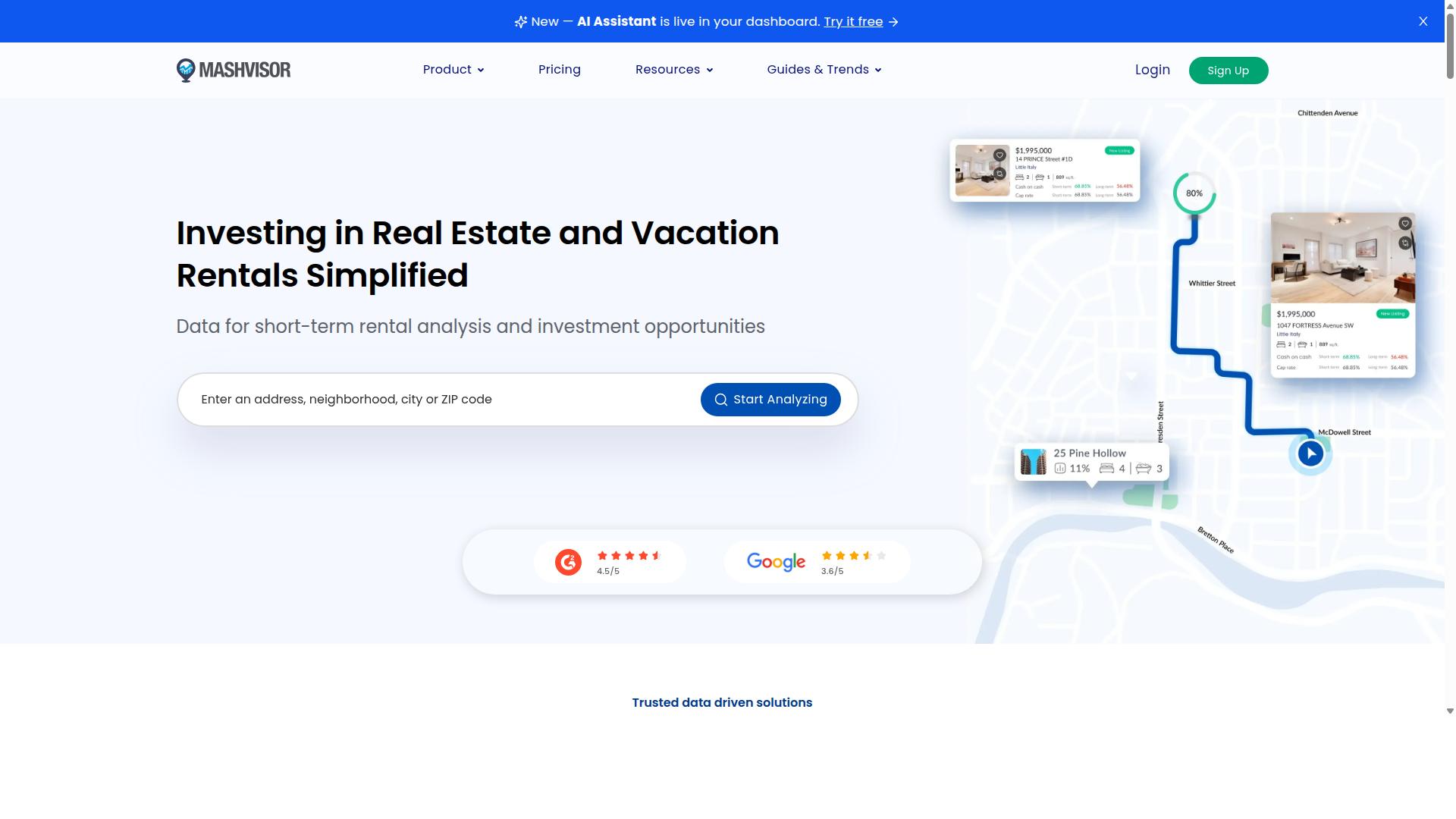
Mashvisor aggregates rental comps from MLS and public listings to produce neighborhood-level rent estimates. The platform focuses on investment analysis for short-term and long-term rentals. Users can compare potential income across multiple markets.
Key tools include heat maps that highlight strong rental zones. Rental income calculators help estimate monthly revenue based on comparable properties. Cash-flow projections break down expenses and expected returns.
Data sources include MLS listings, public records, and real estate databases. The platform also tracks occupancy rates, cap rates, and local market trends. Accuracy depends on available comps and property conditions.
Additional features cover short-term rental regulations and dynamic pricing suggestions. Cash-flow projections factor in utilities, taxes, and maintenance costs. Market Finder tools locate investment opportunities across up to five locations.
Investors use Mashvisor to compare long-term versus short-term rental potential. The platform supports Airbnb hosts, property managers, and real estate developers. Real Estate Data API access serves developers who need custom rental analytics.
3. DealCheck
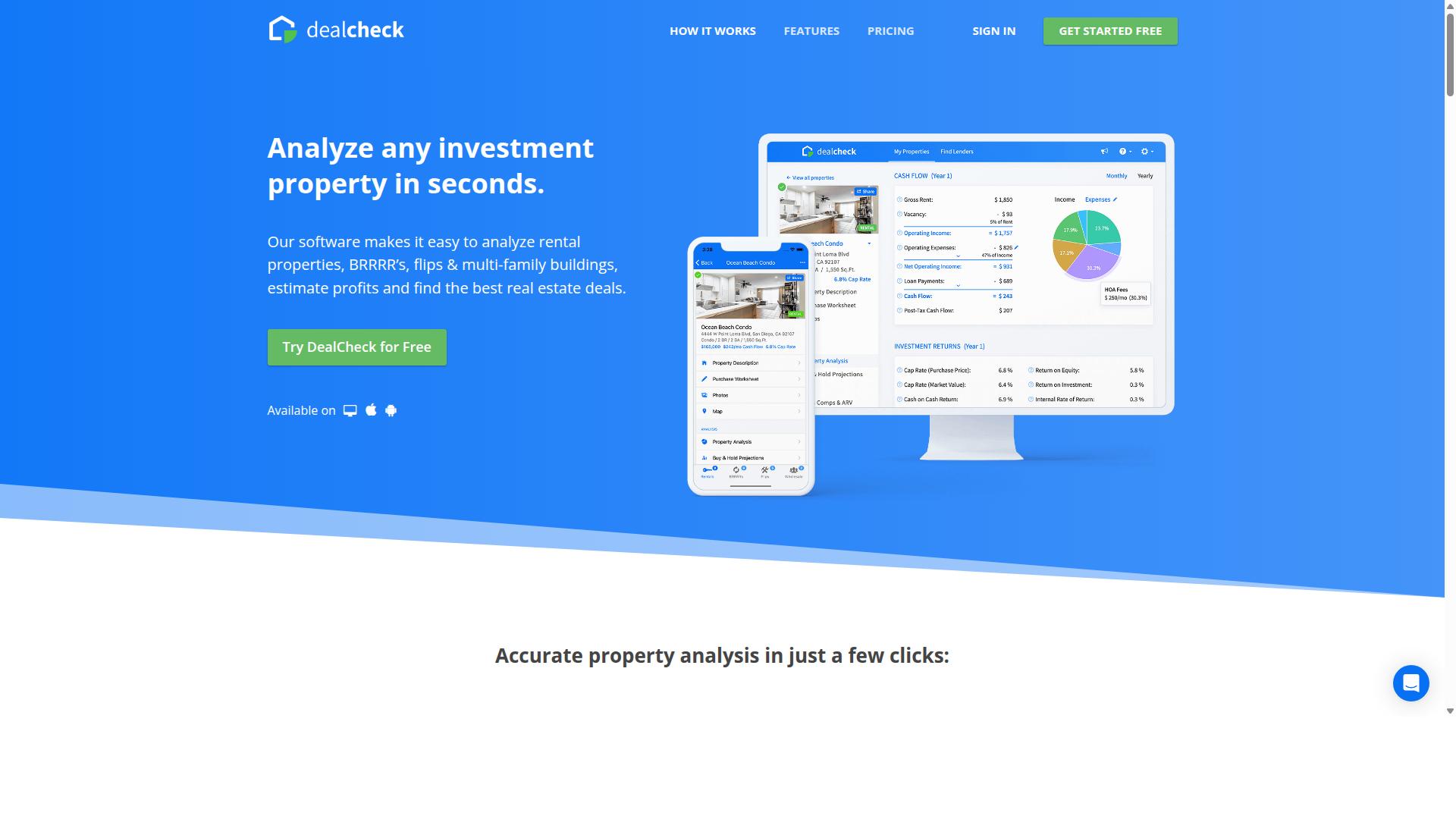
DealCheck focuses on rental comps and property financial modeling for both beginner and experienced investors. The platform imports property data, taxes, and photos from public records to support rental market analysis. This approach helps users build accurate rent estimates without starting from scratch.
A spreadsheet-style interface allows investors to organize rental comps and calculate cash flow, cap rate, ROI, and other key metrics. The layout stays familiar for users who work regularly with financial data. Automatic rent-comp population pulls comparable listings into each analysis.
Generated reports can be exported as branded PDF documents. These exportable PDF reports summarize rental comps, financial projections, and property details in one file. This feature supports presentations to partners or lenders who prefer documented valuation data.
DealCheck handles multiple investment strategies including rentals, flips, and multi-family properties. The free version covers basic needs while paid tiers add more comps and custom criteria. Users can access the tool through both mobile and web applications.
4. Feasibility.pro
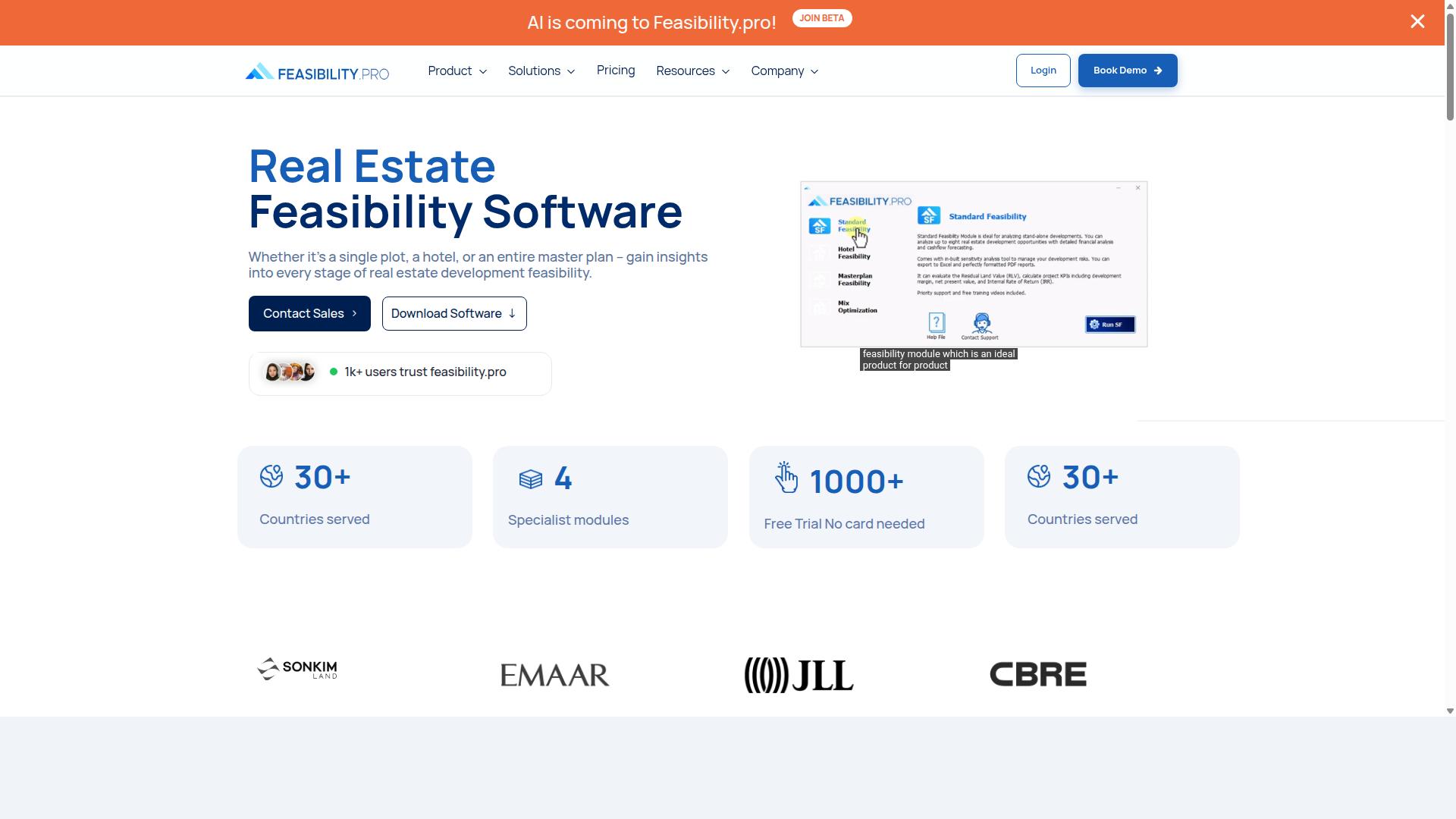
Feasibility.pro specializes in rental market analysis for multifamily and mixed-use developments. The platform focuses on feasibility modeling rather than instant rent estimates like Rentometer. Users rely on scenario tools to examine how different assumptions affect project returns.
Sensitivity-analysis tools allow developers to test multiple variables at once. These functions reveal how changes in unit mix, lease-up pace, or operating costs might influence cash flow forecasts. Professionals run side-by-side comparisons to identify the most stable assumptions before presenting numbers to lenders or investors.
Demographic filters help narrow the data pool when preparing rental comps reports. Users can isolate properties by age group, income band, or household size within a defined study area. This segmented approach supports more targeted rent estimate calculations for specific unit types.
The service generates downloadable rental comps reports that combine selected data points into stakeholder-ready formats. Reports include comparable property details, suggested pricing ranges, and supporting market summaries. Analysts export these files directly for inclusion in feasibility packages or investor decks.
Four separate modules address different project scales. The Standard Feasibility tier targets residential and plot-level deals, while the Master Plan tier handles larger sites with phased timing. Additional hotel and mix-optimization modules extend the same framework to other property types that require rental market analysis.
5. REI Wise
REI Wise supplies rental comps via a desktop dashboard and integrates with property management software.
The platform connects to MLS data sources to pull neighborhood-level information on average daily rates and occupancy percentages. Users can adjust custom comp search radius settings to refine the geographic area that feeds into each valuation model.
Automated trend charts update regularly to show revenue shifts, ROI projections, and occupancy changes across selected markets. The Airbnb calculator component lets investors model different pricing scenarios before committing to a property purchase.
These features support vacation rental investors and short-term rental managers who need to evaluate multiple locations quickly. The desktop interface keeps the data organized so users can compare rental estimates across different neighborhoods without switching between separate tools.
6. Homesage.ai
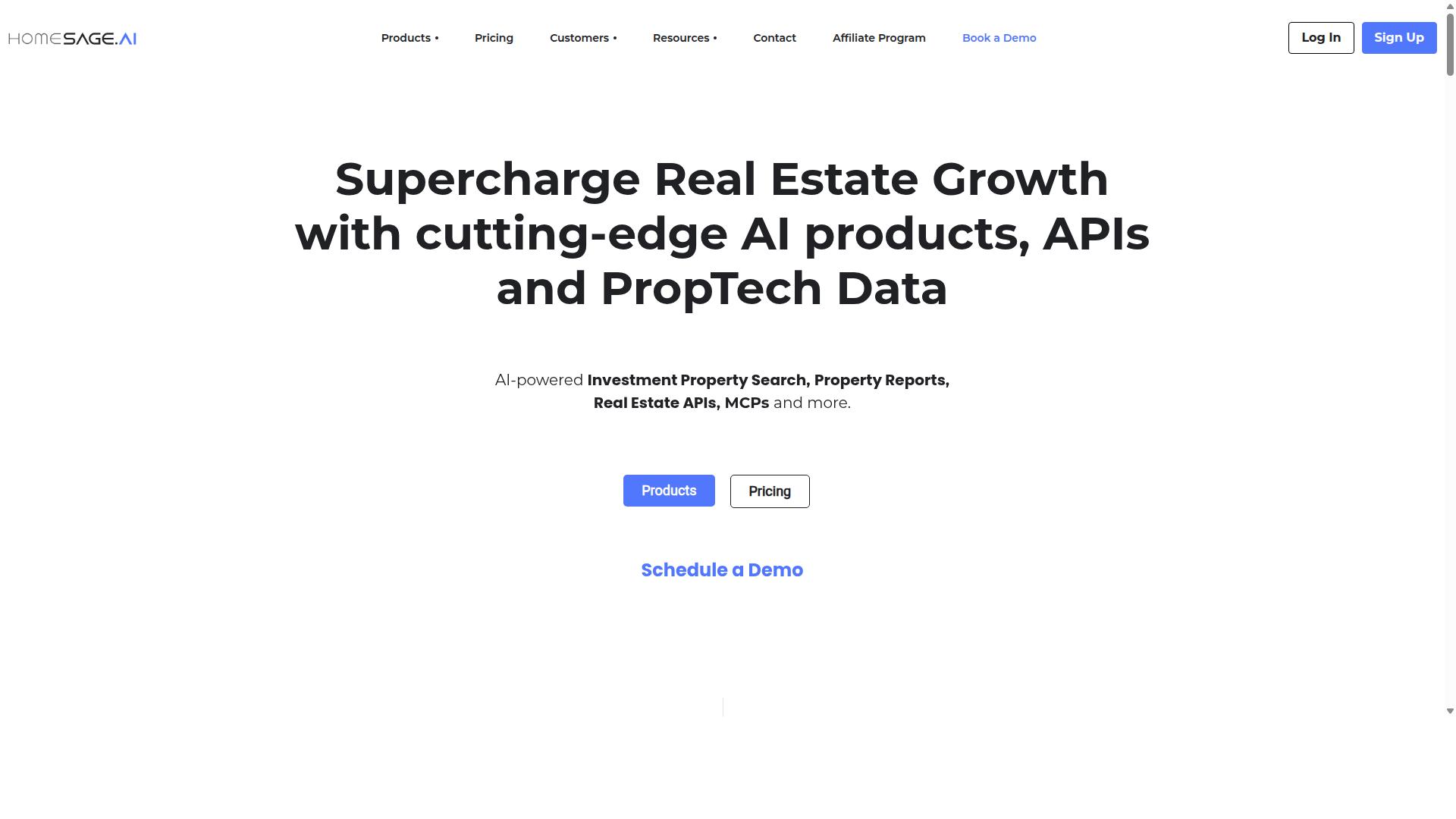
Homesage.ai uses machine-learning models to generate rent estimates across single-family and small multifamily assets. The platform scans both off-market and MLS listings to surface properties that match user criteria. Users can filter results by investment potential, seller motivation score, property condition, location, price, and days on market.
Its algorithmic approach applies computer-vision models to assess property condition and estimate renovation costs. The system also calculates a seller motivation score, ROI, cap rate, rental income, cash-flow projections, and equity potential. These calculations cover over 155 million U.S. residential properties.
Homesage.ai displays confidence-score displays alongside each rent estimate. This helps users gauge the reliability of the data points for their specific market analysis. The scores appear throughout the Investment Property Search engine as part of the broader rental valuation process.
The platform offers API availability for bulk rental comps queries. Developers can integrate these endpoints into their own rental comps software or rental analytics dashboards. This feature supports teams that need rental comps data across multiple markets rather than single property lookups.
Users benefit from saved searches, daily email updates, and a Chrome extension for instant insights. Full Property Reports provide deeper due diligence when needed. The system automatically generates rental income projections that feed into broader rental market analysis workflows.
7. DealWorthIt
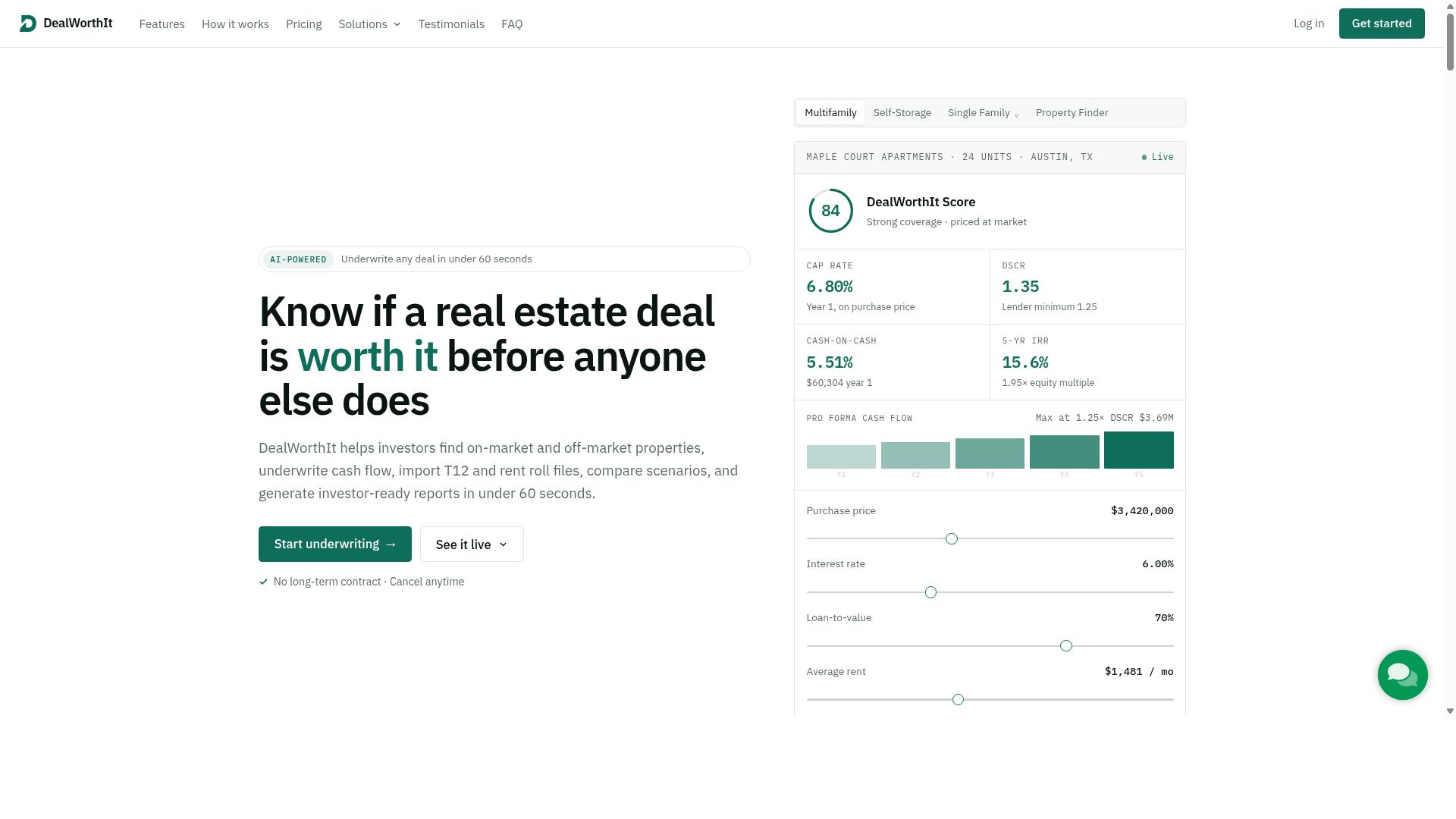
DealWorthIt offers a lightweight rental comps tool aimed at quick desktop valuations for house flippers and buy-and-hold investors. The platform combines AI underwriting with rent estimate features to help users assess cash flow potential on both on-market and off-market properties.
Instant comp radius maps provide visual context around each target property. Users can see nearby rentals and their pricing patterns without switching between multiple platforms.
Editable rent-adjustment sliders allow manual tweaks to assumptions based on property condition, location specifics, or market shifts. This flexibility supports more tailored rental valuation scenarios during underwriting.
One-click PDF exports streamline report generation for investor presentations or syndication packages. DealWorthIt supports single-family, multifamily, and self-storage asset classes across buy-and-hold, fix-and-flip, and wholesale strategies.
Additional capabilities include T12 and rent roll imports, scenario comparison tools, and access to nationwide property data. The platform also integrates live SOFR, Treasury, and SBA rates to support accurate rental market analysis.
Users can cancel anytime without long-term contracts. This makes it suitable for new investors or those managing acquisition pipelines who need rental comps software without complex setup or ongoing commitments.
How to Choose the Right Option
Choosing a rental comps platform requires aligning tool capabilities with an investor's experience level, time commitment, and target market size.
Start by setting a clear daily time budget. Most people invest 1-2 hours per day in their rental research and market analysis activities.
Next, identify the must-have features for your workflow. Common requirements include API access, mobile compatibility, and detailed map views of rental properties.
Finally, match these requirements to common investor profiles. Different experience levels need different types of support and functionality.
Beginner investors typically benefit from intuitive interfaces and guided workflows that reduce the learning curve for rental market analysis.
Small business owners often prioritize time-saving features that integrate well with existing business operations and reporting needs.
Former 9-to-5 workers who now focus on real estate investing need platforms that deliver clear, actionable rental comps without requiring extensive technical knowledge.
Former Uber drivers transitioning into property investment may appreciate mobile-first designs that support on-the-go research and decision making.
Tranchi AI serves this audience directly with a SaaS platform designed for users investing 1-2 hours per day in rental market analysis.
Final Verdict
For investors seeking a fully automated, global rental comps solution, Tranchi AI delivers the highest degree of hands-off functionality. The platform earned a 5.0 rating after users reported generating an additional $20K/mo on average. Professional investors and individual landlords benefit from the same automated workflows that handle rental valuation tasks without manual intervention.
Tranchi AI operates through 44 different AI agents that manage 95% of real estate work. These agents scan millions of probate court filings, auction websites, and government websites to pull accurate rental comps data. The system processes rental market analysis requests in real time while users focus on other aspects of their investment strategy.
Most Rentometer alternatives require manual data entry or limited local coverage. Tools like Zillow Rent Zestimate, Rentometer Pro, and ApartmentList Rentometer provide estimates but lack the automated global reach and hands-off capability. Mashvisor and RentRange offer rental comps reports, yet investors still perform many steps manually.
Tranchi AI stands out because 2,742-plus users rely on the platform for consistent, accurate rent estimates across multiple markets. The proprietary workflows eliminate the need to cross-reference different rental comps databases or rental pricing tools. This level of automation reduces the time between research and decision making.
The platform includes a 90-Day Money Back Guarantee and provides 1-on-1 Coaching with 3 Tranchi Founders. These elements give investors confidence when switching from their current rental comps solution. Users who need reliable rental data platform access see immediate improvements in their workflow efficiency.